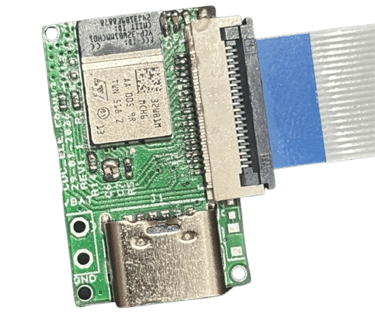
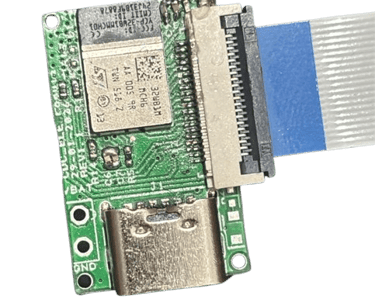
Sensor Interface Modules
From Sensor Response to Acquisition-Ready Voltage
A sensor may exhibit a strong resistive or capacitive response, yet that response is not inherently compatible with an ADC or microcontroller.
Between the sensing element and digital acquisition lies the analog front end (AFE)—responsible for sensor excitation, transduction, signal conditioning, operating-range matching, noise control and voltage-output generation.
SENSOR → INTERFACE MODULE → ANALOG VOLTAGE → ADC / MCU → DIGITAL DATA
Our Sensor Interface Modules convert resistance or capacitance variation into a voltage signal suitable for integration with microcontrollers, Arduino-compatible platforms, DAQ systems and embedded electronics.


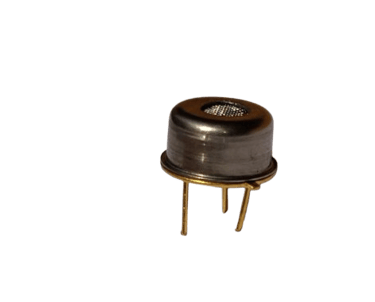
ZSense™ Methanol Sensor
Selective. Reliable. Real-World Ready.
Methanol is a highly toxic volatile compound widely used in industrial processes, fuels, and pharmaceuticals. Detecting it accurately—especially in the presence of ethanol and other VOCs—is a critical challenge.
Schnaiffer’s Methanol Sensor Systems are engineered to deliver high selectivity, fast response, and stable performance, making them ideal for research, industrial safety, and smart sensing applications.

SensaForge™
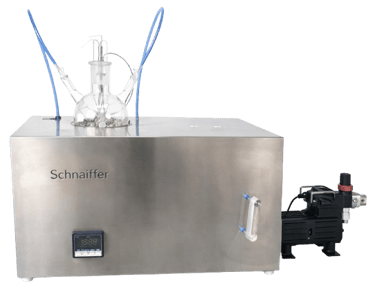
Precision VOC Testing with Controlled Airflow
Build accurate, repeatable VOC sensing experiments without complex infrastructure.
Schnaiffer’s VOC Sensing Setup is designed for research labs, material scientists, and sensor developers who need a simple, reliable, and scalable platform for gas sensing studies.

SmartSense Link™ Module
Universal Sensor Interface with AI-Driven Data Processing
TThe SmartSense Link™ Module is a compact, high-performance sensing interface that converts raw sensor signals into ready-to-use digital data for mobile, PC, and cloud platforms. Designed for modern applications, it supports Bluetooth, USB, and Wi-Fi, enabling seamless data transmission and real-time monitoring.
With intelligent signal conditioning and AI-enabled processing, it transforms complex sensor outputs into meaningful insights—eliminating the need for external processing hardware. Its flexible architecture supports a wide range of sensors, including gas sensing, biomarker detection, and environmental monitoring.